


Event: Establishment of the Regnum Sardiniae et Corsicae
Boniface VIII established the Regnum Sardiniae et Corsicae and granted it to James II of Aragon, defining the legal framework for the future conquest of the island.
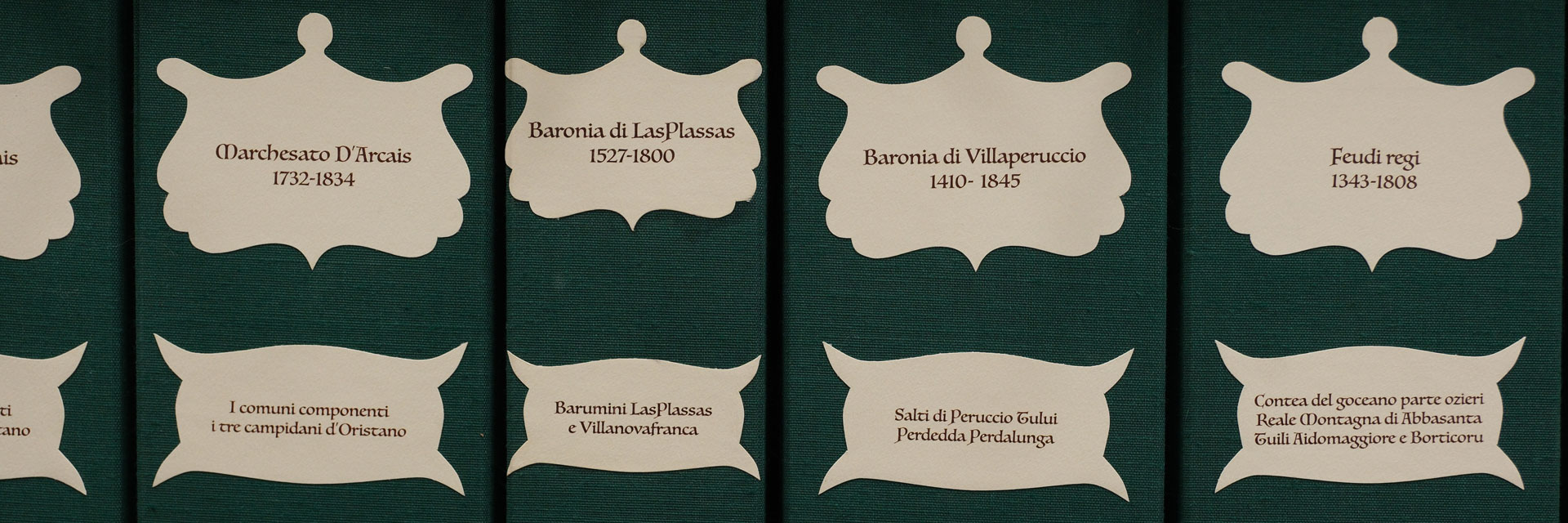
…which, from the fourteenth century to the present day, have been layered into archival holdings, series and records, preserving the written traces of Sardinia’s institutional, political and social life.
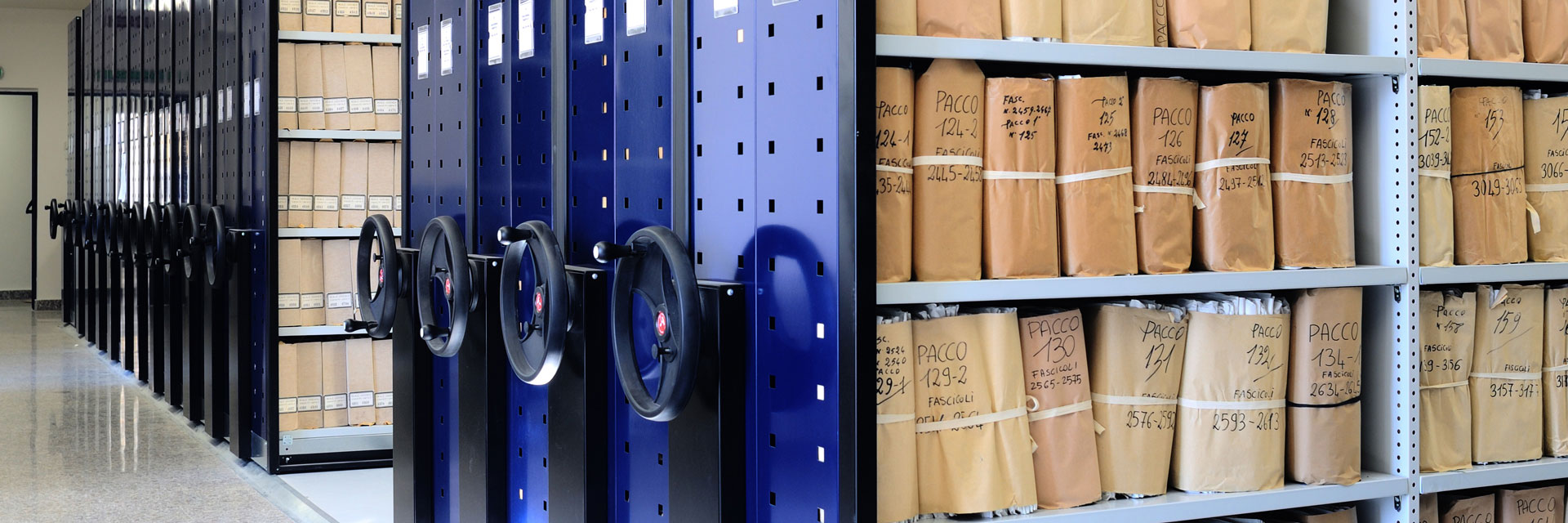
…which, organised into archival holdings, series and research tools, form a system made up of kilometres of archives, boxes, files, registers and documentary units.
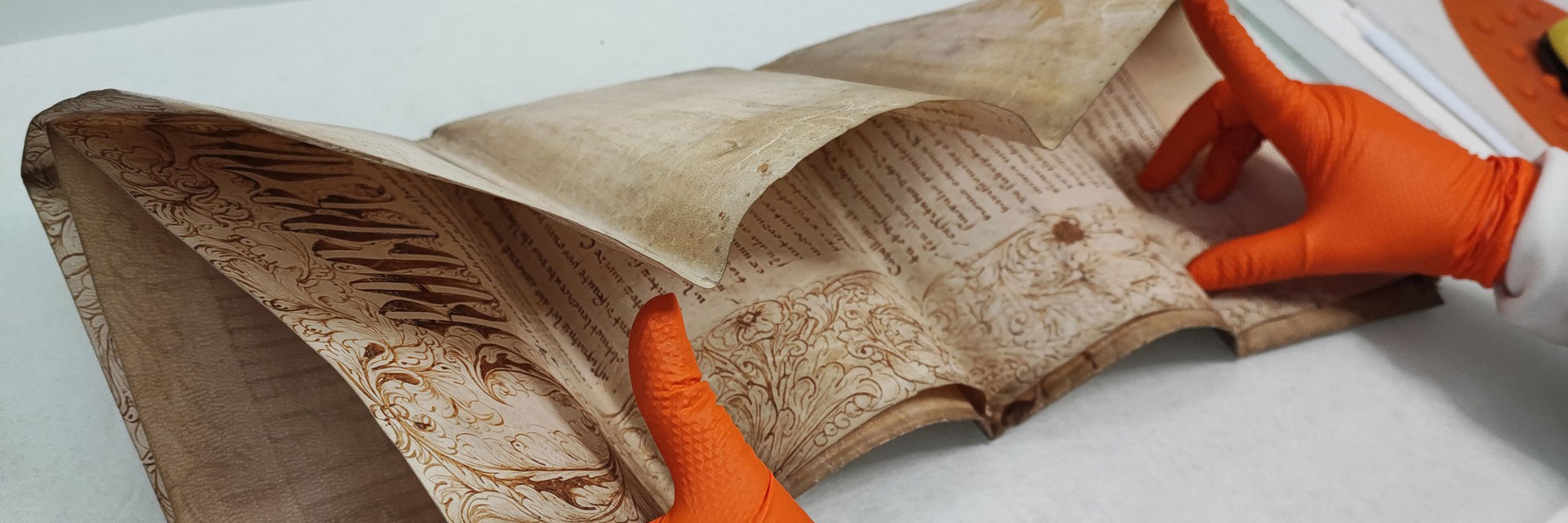
…that make our archival heritage a shared public resource, ensuring its preservation, transmission and continued availability for consultation today.

…constantly evolving and available to the public through online consultation platforms that make the archival heritage searchable, accessible and connected beyond the physical boundaries of the Archives.
From this page, you can access the tools that allow you to consult and explore the archival and library heritage. Each route reflects a different way of approaching the sources: finding your bearings, exploring the structure, searching by keyword, and consulting digitised documents.
Consulting the sources opens up opportunities for historical, genealogical and institutional research. It offers scholars, students and citizens the chance to reconstruct events, contexts and biographies through original documents.
We preserve the past
We rethink the future
If you are approaching historical research for the first time or are unfamiliar with research tools, this guide will help you find your way among archival holdings, inventories and consultation methods.
If you wish to understand the hierarchical structure of the archival heritage, this tool allows you to navigate through archival holdings, series and individual documentary units.
Use a name (person, place or institution) or a keyword to search the archival heritage descriptive system.
If you wish to consult documents online, access the digital library and view the results of our digitisation campaigns.
From the Middle Ages to the contemporary era, a sequence of events and institutions that produced and transformed the archival holdings preserved by the Cagliari State Archives.
Boniface VIII established the Regnum Sardiniae et Corsicae and granted it to James II of Aragon, defining the legal framework for the future conquest of the island.
The landing of the Infante Alfonso marked the beginning of the conquest of the island’s main centres.
The conquest was completed with the expulsion of the Pisans from Cagliari and the consolidation of Aragonese rule.
The extension of Barcelona’s municipal law strengthened the City’s Catalan institutional imprint.
Proclamation: “Prohibition against anyone removing from the city of Sassari, by land or by sea, wheat, barley and flour for ship’s biscuit. Antico Archivio Regio (Old Royal Archives), Cat. II – Edicts and Orders, 1347–1710, vol. C1
The judicature strengthened its autonomy and began the most intense phase of the conflict with the Crown of Aragon.
The epidemic caused depopulation and profound demographic changes.
The conflict intensified until the temporary peace of Sanluri.
Arborea controlled most of the island, leaving the Aragonese with only a few centres.
The treaty temporarily restored peace and redefined the political balance.
Eleanor of Arborea promulgated one of the principal legal texts in Sardinian history.
From 1405 onwards, the archival holdings preserve documents relating to the family’s patrimonial and feudal administration. Together, they offer an insight into political and military relations between the sixteenth and eighteenth centuries.
The defeat at Sanluri and the Treaty of San Martino marked the end of the judicature.
The administrative structure of the Kingdom was redefined.
Alfonso V extended the Carta de Logu and strengthened the feudal system.
From 1461 onwards, the fond brings together administrative and accounting records relating to the management of the family’s fiefdoms.
The Crown completed its control over the island.
Sardinia remained under the Spanish monarchy, while retaining its institutional distinctiveness.
The office responsible for the State’s financial oversight was established.
A new figure was created to link viceregal power and the central administration.
These formed part of the process of religious standardisation across the Spanish dominions.
The supreme court of the Kingdom was established.
From 1564 onwards, the archival holdings preserve judicial and administrative records of the Kingdom’s principal court.
The defensive system against Barbary incursions was strengthened.
From 1591 onwards, the fond documents the management of the coastal defence system.
From 1604 onwards, the archival holdings preserve the family’s patrimonial and institutional documentation.
One of the island’s principal centres of learning was established.
The epidemic led to the institution of the votive festival.
From 1659 onwards, the archival holdings preserve patrimonial and economic records relating to suppressed religious institutions.
The Kingdom entered the Savoy sphere.
The new political order took shape.
From 1720 onwards, the archival holdings preserve records created by the central institutions of the House of Savoy.
From 1721 onwards, the archival holdings bring together sovereign measures and legislative acts.
From 1801 onwards, the archival holdings document the formation of the cadastre and the representation of the territory.
From 1805 onwards, the fond preserves judicial and administrative records from the modern period.
From 1841 onwards, the fond documents cartographic activities and land surveying.
From 1842 onwards, the year of Francesco Cocco Ortu’s birth, the documentary corpus began to take shape, linked to one of the most significant figures in Italian liberalism. The archival holdings include political, professional and family papers, arranged in several groups. Together, they document his parliamentary and governmental activity, institutional relations, and the historical context of the nineteenth and twentieth centuries. Donated to the Cagliari State Archives in 2023, it is an important source for the study of Italian political history and the role of the Sardinian elites in the making of the Italian state.
The fond preserves extensive documentation reflecting the province’s administrative, political and social life. It includes files relating to Prefecture and Public Security staff, as well as papers on municipal affairs. It also contains wartime and air-raid protection records, including projects and documentation on the management of evacuees, together with records concerning public order, particularly strikes and social conflict. The Archives substantially intact up to the 1950s and 1960s, bear witness to the functions and activities typical of the state apparatus.
From 1887 onwards, the fond preserves scientific and personal documentation.
From 1887 onwards, the archival holdings document the factory’s production and administrative organisation.
From 1910 onwards, the archival holdings preserve scientific and cartographic materials relating to Sardinian territory.
From 1972 onwards, the archival holdings include records relating to Il Messaggero Sardo, a newspaper dedicated to Sardinian emigrant communities in Italy and abroad. It includes issues of the newspaper, editorial materials and documentation connected with the production and circulation of the publication. Together, these provide direct evidence of migratory experience, association activities and the cultural ties maintained with the island. The archival holdings constitute an important source for the study of contemporary Sardinian emigration and the identity dynamics of diasporic communities.
A selection of archival holdings, collections and documents offering an example of the richness and variety of our archival heritage.
The Il Messaggero Sardo archival holding preserves documentation produced and gathered around the newspaper of the same name,…
Documents on parchment support between ecclesiastical and civil institutions.
Surveying and representation of the territory in pre-unification Sardinia.
The sources of the island’s government between the Aragonese, Spanish, and Savoy periods.
Archival holdings available for on-site consultation
Metres of linear shelving
Images produced through our digitisation campaigns
Volumes, including books and journals, supporting research

Preservation and protection
The archival and library holdings are kept in controlled environments and are subject to constant monitoring. Preventive measures and restoration work ensure their material integrity and transmission over time.
Description and arrangement
Archival arrangement and description organise the archival holdings in accordance with national and international standards. They are then made available for consultation through inventories and other research tools.
Digitisation and advanced access
Digitisation campaigns transform archival sources into materials that can be consulted online. This expands access to the archival heritage and integrates them into the contemporary information ecosystem.
Research Support
Reading room staff help researchers navigate the archival holdings and research tools, providing expert support throughout the consultation process. The specialist library complements research, supporting historical and methodological study.

Memory is a common good: it grows when it is shared.
Subscribe to the newsletter to receive updates on activities, projects, events, and initiatives of the Cagliari State Archives.
Digitising to preserve, provide access to and connect the archival heritage beyond their physical boundaries.
Already digitized
Digitization in progress
Not digitized
Old Royal Archives
30 %
15 %
55 %
Government and Administrative Records
45%
55 %
Technical Treasury Office of Cagliari
68%
32 %
The Archives’ digitisation programme is carried out through successive projects focusing on archival holdings selected according to their preservation needs, historical significance and level of consultation.
At present, the projects involve six archival holdings: Antico Archivio Regio (Old Royal Archives), Government and Administrative Records, Technical Treasury Office of Cagliari, Royal General Staff Corps, Parchments, Plans and Profiles.
Each intervention forms part of an integrated data management plan. Its aim is not only to create digital reproductions of documents, but also to integrate them into advanced, interoperable consultation systems designed for future use.
Digitisation is therefore an evolving process, combining preservation, access and innovation.


