Book heritage
The library of the Cagliari State Archives as an integral part of the system of sources and research tools
A specialist collection created for the study of sources and developed over time into a point of reference for archival and historical research.
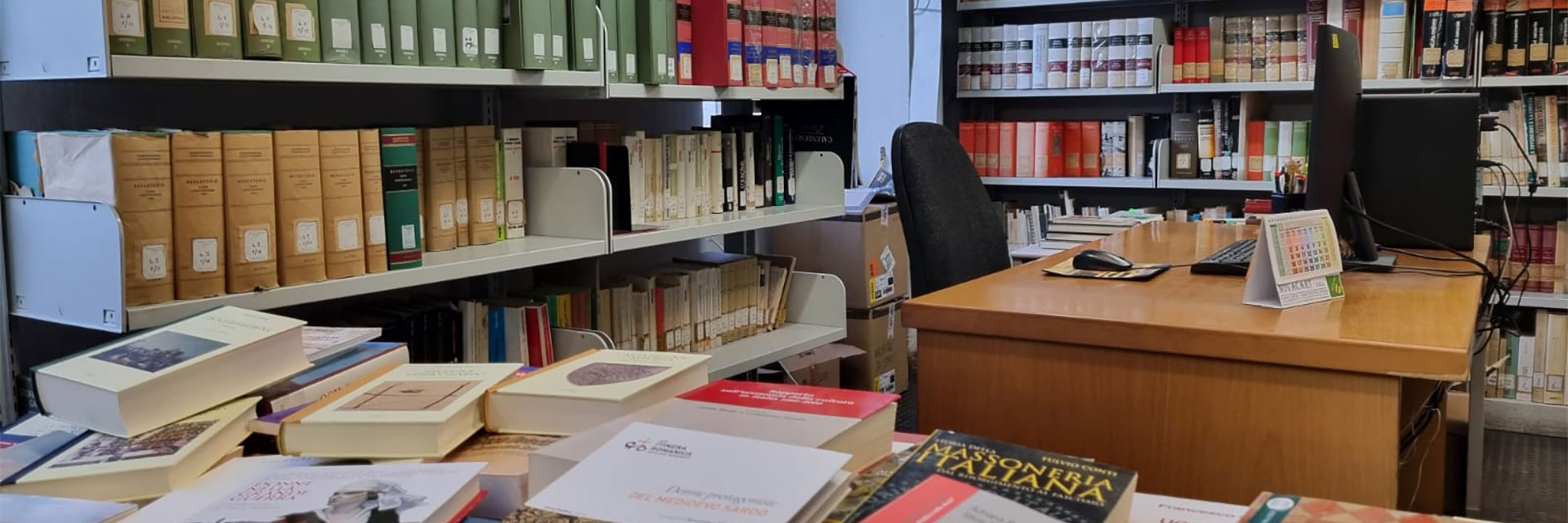
The library of the Cagliari State Archives forms an integral part of the Institute’s heritage.
We preserve the past
We rethink the future
Established from the second half of the nineteenth century onwards, it originated as a service library intended “especially for the staff of the Archives”, as provided for in the 1911 Regulations.
Over time, the collection has become an increasingly important resource for bibliographical research and for the study of the documentary sources preserved by the Institute.
Today, the book heritage takes the form of a specialist collection closely connected with the activities of description, arrangement and interpretation of the archival heritage.
Formation and extent of the collections
A heritage built over time through institutional acquisitions, donations and bequests, now organised as a broad and specialist collection.
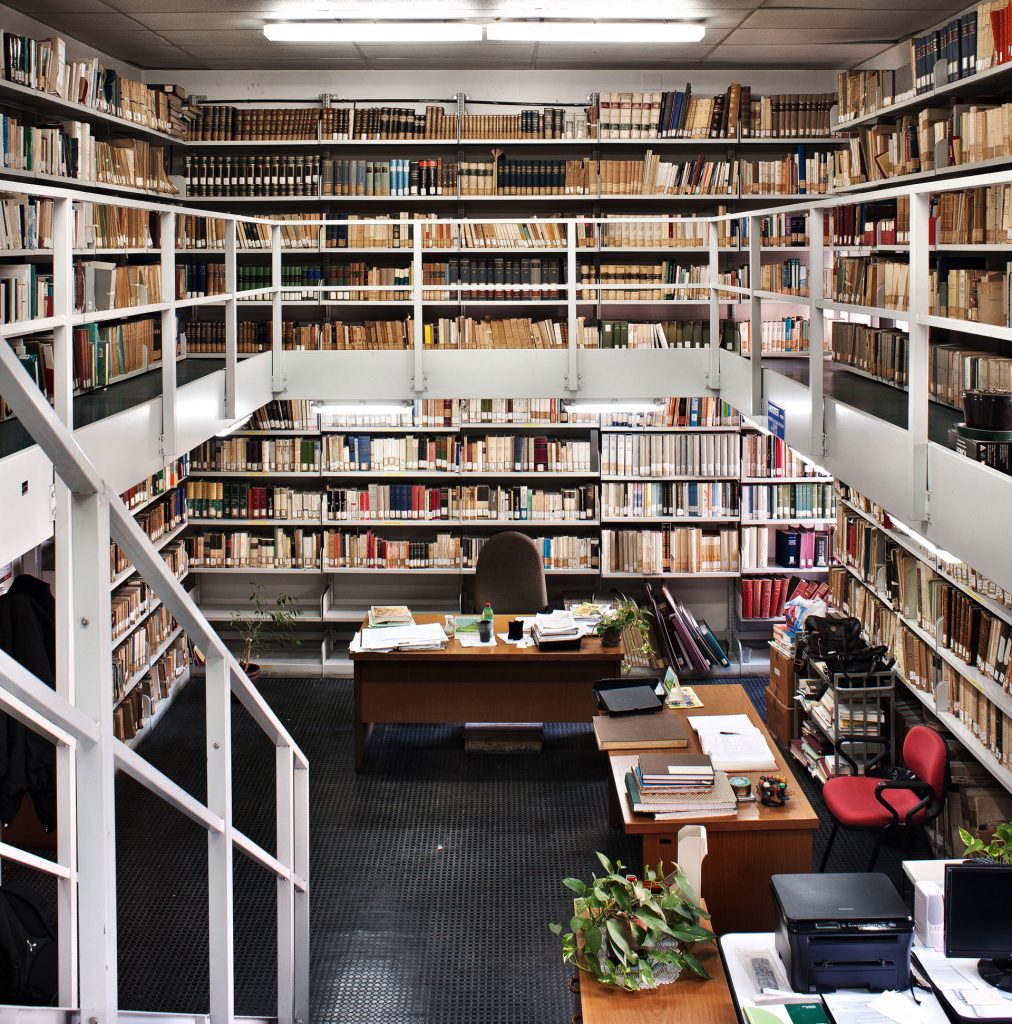
Initially, the library of the Cagliari State Archives consisted of a small core collection, made up mainly of donated volumes. It gradually expanded through targeted acquisitions, ministerial transfers, donations and publications deposited by researchers as mandatory copies. This process of growth reflects, on the one hand, the activity of the Institute and, on the other, the development of archival studies and historical-institutional scholarship.
Today, the collection comprises more than 51,000 volumes, 21 manuscripts, 25 sixteenth-century printed books, 47 prints and drawings, 485 periodical titles and around 400,000 microfiches. It also includes a substantial body of photographic, audiovisual and cartographic material, together with more than 500 degree theses. The scale of the collection conveys the tangible dimension of a library built over time as a working and research tool.
The collection has a strong specialist focus. Alongside publications on the history of Sardinia and the documentary sources preserved by the Institute, it places particular emphasis on the archival fields (archival science, palaeography and diplomatics) as well as on historical, institutional and legal-administrative studies. In these fields, the library represents one of the most significant collections at regional level.
A substantial part of the heritage derives from collections acquired through donation or bequest, which often preserve the original coherence of those collections. Among these are the Antioco Polla collection, devoted to history and philosophy; the Francesco Loddo Canepa collection, reflecting the scholarly activity of the Institute’s former director; the Silvio Vardabasso collection; and the Rusconi collection. The library also includes the Ugo Carcassi collection, dedicated to the life and work of Giuseppe Garibaldi, and the ISSRA collection, relating to the history of the Resistance and regional autonomy. The collection formerly belonging to Ovidio Addis is not currently available for consultation for patrimonial reasons.
Taken together, these nuclei help define a stratified book heritage that has long accompanied and supported the activities of study, description and interpretation of the archival heritage.
Cataloguing and integration into the national system
Bibliographic description follows national standards and provides access to resources through shared cataloguing systems.
Bibliographic information is organised in accordance with the standards established by the Central Institute for the Union Catalogue of Italian Libraries (ICCU), in compliance with the RICA and ISBD rules. This ensures uniformity and interoperability in the description of resources.
The library participates in the National Library Service (SBN) through the Sardinian regional hub.
The collections can be consulted through:
- online catalogues (OPAC SBN)
- traditional catalogues by author, title and subject
- specific tools for periodicals, manuscripts and graphic materials
This integration places the Institute’s book heritage within the national bibliographic network, ensuring its visibility and accessibility.
Relationship with the archival heritage
A library that originated and developed in direct relation to the sources, as a tool for understanding, interpreting and making them accessible.
The library holdings of the Cagliari State Archives are not separate from its archival holdings. Instead, they have developed in close relationship with them, supporting the needs of research, description and interpretation over time.
The collections reflect the historical and institutional contexts in which the documents were produced. They provide essential tools for understanding the nature of the sources, the functioning of administrative structures, and the evolution of legal and political systems. In this sense, the library makes it possible to place documents within their context, overcoming an isolated reading of individual archival units.
At the same time, the book heritage supports the Archives’ technical activities. Arrangement, description and the production of research tools also rely on repertories, specialist studies and methodological models preserved in the library.
Together, the archival and library holdings form an integrated system. The sources and the tools for interpreting them reinforce one another, making research more informed, structured and in-depth.
The collections support:
- analysis of historical and institutional contexts;
- interpretation of documentary sources;
- archival arrangement and description activities;
- specialist scholarly research.
In this way, the library contributes to the function of the Archives as a place of preservation, study and knowledge production, strengthening the link between documentation and research tools.


